Tuesday, December 30, 2008

Parrot Minikit Chic for Hands-free Dialing


When you're driving in your car, talking on a cell phone can be distracting. When you start dialing numbers with your fingers while you are driving, you become downright hazardous.

In some states (and countries) you could get a hefty ticket for dialing while driving, in others it's just not very smart. Enter the Parrot Minikit Bluetooth device. With this clipped to your visor, you can dial away and chat away without ever touching your actual phone.

I normally shy away from the most geeky travel gadgets, but this one is truly practical. It also does exactly what it's supposed to do, without requiring hours consulting a manual. You just sync it up with your Bluetooth-capable phone (easy), clip it to your car visor, and start using it. When someone calls, you touch one button and start talking. Press the same button when you're done. The manual is only six pages long.

Here's the really cool part though: its software "reads" all the contacts in your phone and when you just say that person's name, the device dials it for you. On a four-hour road trip I made a series of calls with no hitches. When I first turned it on, the Minikit asked, "Who would you like to call?"

I replied, "Mom," A few seconds later, I was chatting away with my mother. I tried my wife, my dad, and a couple names--one being a rather odd foreign one that the Minikit nevertheless picked up on and dialed. You can specify which number to dial if you have more than one for that contact, such as "Paul mobile" or "Cindy home."

The only real drawback is the sound quality on the other end. Like most speaker phones, the device picks up a lot of extraneous car noise, so it's not as good as say, a Jawbone that has a built-in filter. The person talking to me sounded fine though.

The Parrot Minikit plugs into a car charger to recharge. The regular Minikit looks like a small science fiction spaceship model, but I tried out the Chic version, which lives up to its name. It's fashionable enough to get some, "What's THAT?" questions from passengers and is far more minimalist than most of these nerdy devices. There is no visible speaker: a vibrating panel of the device itself supplies the sound. It lists for $110, but goes for less at a lot of outlets. Very cool, very useful, and yes, practical.

Get it at Amazon

Friday, December 26, 2008

ExOfficio Women's Travel Sweaters


I'm a big fan of ExOfficio products, packing my bag with their quick-dry underwear, my Air Strip Lite shirt, and usually a pair of shorts or pants as well. I wish I had brought a few Buzz Off items to help keep the insects at bay on my recent trip. But the company also sells a line of woolies that are good for the current wintry weather.

A while back I reviewed a soy sweater for men from ExOfficio that was a woven one. This Shannon sweater for women is more of a loose knit, giving a slimmer profile while feeling a bit thicker. It's got a bit of everything in it: 40 percent wool, some synthetics for the wicking properties, some soybean for extra eco-cred, and some cashmere to justify the price, which is north of $70 even when on sale.

But hey, it's soft, well-made, and flattering to the figure based on how it looks on my in-house model. It comes in five sizes and two colors: this one and "natural." Hand wash or dry clean only.

If you don't like this one, ExOfficio has 21 other models to choose from, ranging from a marked-down $18 fuzzy fleece to a $100 zippered version of this model pictured here. Right now you can get the benefit of post-holiday sale prices and $5 shipping at ExOfficio

Tuesday, December 23, 2008

Lowe Alpine Airzone Centro 35 Pack

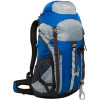
Lowe Alpine AirZone Centro 35 Pack - 2100cu inI don't get a lot of chances to do real backcountry hiking, but on this last trip I went up and down (and up and down) the mountains of Peru carrying a daypack. Mules had most of the heavy load, but I used this Lowe Alpine Centro 35 daypack to carry all the essentials along the way. Water bottles in the side pocket, camera and changes of clothes in the middle, all the little items in the top zippered pocket.

I've had my eye on this pack since my last Peru trip. Then I hiked the Inca Trail, my back constantly soaked from the pack resting against it. Meanwhile, my guide was cool and dry because his Lowe Alpine pack had a mesh backing keeping the pack suspended away from his clothes. It was my turn to stay comfortable this time. The mesh backing on this daypack does let the air flow through nicely and it's quite comfortable in varied temperatures.

Otherwise, it's what you would expect in a daypack and more. The overall design follows what seems to have become a standard now: internal support frame, deep interior compartment with cinch strap closing, front compartment for flat items, two mesh side pockets, a foldover top flap with roomy zippered pocket, another small zippered pocket on the front, and a side zipper to get in without opening up the whole contraption. Traveling around the world with this setup would drive me batty, but for moving through the woods and only getting into it now and then, it's ideal. Plus it comes with a built-in rain cover (the orange part here) that tucks away in a bottom flap when not needed.

There are padded hip straps and a sternum strap that can be adjusted horizontally and vertically. At 3 pounds 3 ounces, this is not the lightest pack around, but it is extremely rugged and can be jammed to capacity without worries about splitting a seam. It holds 35 liters (2,100 cubic inches) and has all kinds of loops and straps for adding things to the outside of it. A very good mid-size backpack for your next hiking trip, from a company with a solid reputation: Lowe Alpine. Highly recommended.

I can't get a direct product link to work on the Lowe Alpine site, but see the whole line of Lowe Alpine products and click on "hiking" for the various daypack options.

As a commenter pointed out, there's a "35 + 10" version of this that lists for $179 instead of $149.

Lowe Alpine Airzone Centro 35 at Amazon

Get the AirZone Centro 35 Pack at Backcountry.com

Saturday, December 20, 2008

NGA's Best Gear of 2008

KOR ONE water bottle The current year-end issue of National Geographic Adventure has a "must-have" gear list for the best of 2008. Some of the items are well beyond the scope of a blog called "Practical" Travel Gear of course. I don't think I'll be trying out the $11,500 mountain bike, $6,900 watch, or $350 sunglasses anytime soon.

There are plenty of featured items though that are fairly affordable yet do what they do very well. I haven't personally laid hands on any of these, but I assume NGT gear reviewer Steve Casimiro has. Something tells me he's at the top of every gear company's mailing list.

Columbia Rapidfire Windshell - made of stronger-than-usual 20-denier nylon, water and wind resistant, but weighing only 4.5 ounces. At a list price of $80, this doesn't hit your wallet or your backpack very hard.

Hi-Tec V-lite Hornet HPi hiking boots - Could they make that name any longer? I've always viewed Hi-Tec boots as the cheapo choice, probably because I lived in Korea where they were made and you could buy them for a song in Itaewon. Apparently they have improved, as this model gets the nod for its innovative new moisture management system: some kind of plasma ion-mask that uses nanotechnology instead of the normal wicking membrane. Vibram tread and a 3/4 shank make it ready for any conditions and despite all the technology, list price is $115---not much above the norm.

KOR ONE Hydration Vessel
- This gets featured for its cool-looking design and its BPA-free Tritan plastic. I like the fact it has a flip-open wide top so it's easy to fill and easy to purify (unlike the cool-looking but less practical Sigg bottles). Plus for this price, $30, you also get a rubberized base so it's not so slippery.

Nokia MD-8 - (picture below) OK, this is the one I'm really lusting over, to be honest. It's a "booming sound quality" iPod speaker set that blasts out tunes in stereo, yet fits in the palm of the hand. It runs for 40 hours on the batteries, has an FM tuner, and is a reasonable $50 list. Damn, too late for the Christmas list...
See a photo tour of the best gear items on National Geographic Adventure's site.


Tuesday, December 16, 2008

Lightweight Waterproof M's Revel Jacket from Outdoor Research


I was worried a lot about being able to pick the right jacket for my current two-week trip in Peru. It had to work well for a six-day Saltankay trek in the beginning of rainy season, be light enough to pack in a carry on bag, and be warm enough for cool evenings in Cusco.

This M's Revel jacket from Outdoor Research passed with an A+. I have to say that this is hands-down the best lightweight jacket I've ever worn. Its waterproof functionality came through fine during one and a half rainy days of trekking. It has a reflective interior that makes it surprisingly warm when the weather gets cold and the wind picks up. With a couple layers underneath, this jacket would probably work down to 40 degrees F or so.

It weighs under a pound and packs up a small as a T-shirt. There's a zip-away rain hood with cinch straps, two zippered outside pockets under flaps, one interior pocket with an earphone slit, and cinch straps on the bottom to pull it tight. There are also zippers on each side that go all the way up to the armpits, presumably to help you get to pockets in your snow bibs or to let the heat out when you get too toasty. And hey, you can pop it into the washing machine when it gets dirty.

It's made in China of 100 percent nylon (well, Shield DS Pertex fabric if you want to get technical), but still all this smart design doesn't come cheap. The M's Revel jacket lists for $150. There's an "infinite guarantee" though and based on my tests over the past few years with other Outdoor Research products, you won't need it.

I don't usually get too enthusiastic about a piece of outerwear, but I love this jacket. Something's getting tossed out of my coat closet so this can go into a prime position.


Get the Revel Jacket at Backcountry.com

Friday, December 12, 2008

Bamboo Base Layer from Kombi


I'm in Peru right now trying out lots of new gear in the Andes Mountains, but am not near a computer very much. So for a while these travel gear reviews will be coming in drips and drabs.

First up, this wicking base layer from Kombi. I've been wearing it on many a cool morning in Colca Canyon and it will get heavy use on my upcoming trek. It's a soft as a cotton shirt, but is actually made of bamboo. Well, 48 percent anyway, then an equal part of CoolMax and just a dash of Spandex. So the majority of the materials came from a sustainable resource and it doesn't feel as synthetic as the usual wicking layer.

It works well with the zipper open: unlike many of these mock turtleneck designs I try out, the collar lies flat. If the air is cool though, zip it to the top and it provides extra insulation around the neck. Anti-chaffing flatlock seams are a nice touch and the top of the zipper goes inside a fold. Kombi also makes models are a thicker bamboo/merino wool blend and this one comes in four colors.

The women's version is a two-tone affair, in five options like the one pictured here.

As with most bamboo weave products, you can't just toss then in the washer and dryer though. jfjfj. The good news is, if you're on an extended trip and are doing a lot of sink washing, this shirt dries more quickly than cotton or synthetic fleece. It's just a single layer though: bring something heavier if you're facing frigid conditions.

You can find Kombi products at ski shops, or check their site for other options.

Monday, December 08, 2008

Fun Designer USB Drives from Mimobot


Almost all of the travel gear reviews I run on here are based on items I've tried out myself, but sometimes an item is just so perfect that I know I'd buy it immediately. When someone from SeekingDesigners.com contacted me about these cute Mimobots, they screamed out "cool stocking stuffer!"

Let's face it USB thumb drives are pretty much all the same if you go with the basic features. They get the job done and they're fine. But if you have someone on your list who likes to instill a little style in his or her workplace, one of these might be the ticket.

There are a variety of designs, some more feminine, some for those with a Star Wars fetish. (Besides the Storm Trooper one here, there's also a funny Chewbacca one and a not-so-scary Darth Vader.) Some are based on Japanese manga figures, so there's another obsessive type you can take care of.

They come in capacities from 1 to 8GB and are loaded with character-specific animation. See a quick sampling of Mimobots at the Seeking Designers site, where there's also some background on the artist.

To actually buy them though, you need to head over to the Mimoco site, where there's a whole slew of new ones posted on a regular basis. Most designs are $18 to $25 for the 1GB version and go up from there. Buy a few and you'll get a sizable discount.

Friday, December 05, 2008

Epson's Artisan 700 Printer for Photos and Docs


In these days when contract manufacturers in Asia are building almost everything electronic, you would think brands don't matter much. But when it comes to printers, Epson seems to always have the edge for models that handle photos well. I just got a confirmation of that when trying out a new Artisan 700 3-in-1 printer from Epson.

First of all, man have these printers come down in price. A few years ago I paid around $320 for a highly rated Canon one, then my last one with even more features was $160 online last year. This Epson model lists for $249, but even the Epson site sells it for less and you can routinely find it for close to $150 on sale. Of course part of this is the razor blade model: don't charge so much for the printer, but soak everyone badly on the ink. This Artisan line uses six, yes SIX ink cartridges, so you'll be spending a pretty penny if you run off hundreds of photos on a routine basis.

If you're like me though, you've got a thousand or two photos on your hard drive and it seems you rarely get around to printing them out. Sometimes you just want one or two of them and you don't want to pop by Wal-mart or put in an order through Kodak Gallery just for that. So it's helpful to have a printer in the house that can do the job well.

Earlier I reviewed Epson's PictureMate model, which is dead simple and handy for just doing 4 X 6 prints. This one is a different story. There are more features than I'll ever get a hang of, but in short it will print any size photo up to 8.5 X 11, will print a few on one page, will print out picture CDs you've burned, and will work as a regular printer and scanner. Furthermore, it does all this through a network and wirelessly as well.

It took me a few dud photos to realize I needed to tweak the printer settings each time I did a new task, but once I figured that out I ended up with photos that were really close to what I get from a commercial printing service. Suitable for framing. It seamlessly hooked up to my network and printed out photos from a computer on the other side of the house. It printed others from my wireless laptop. (I just had to install the drivers.) The printed CDs were the only disappointment. They look fine, but you can just print a picture onto them---no ability to add a track listing for music, or even a title, unless you're able to create all that in Photoshop beforehand and save it as a file. It's a whole lot faster to just break down and use a Sharpie.

I compared the pics to what comes out of my 4-cartridge Canon Pixma and must admit those other two cartridges do seem to help: my Canon shots weren't as accurate or crisp. They took longer to print too.

The scanning, copying, and document printing have been going fine too in my tests, so this is a great workhorse printer that can do almost everything you need done, without taking up a lot of space. It even prints on both sides of the paper if you want and with a two-year warranty, you should be set for a while. With this as your home printer, you can get some of those photos out of the virtual world and into the real one. See more features at the Epson site.

Get it at Amazon

Tuesday, December 02, 2008

Renting a Cell Phone for Travel

As I noted in this MSNBC article I wrote a while back, using your home cell phone when you travel can cost you a fortune: Traveling with your cell phone? Beware.

Most travelers have no idea how much they're getting dinged on every phone call and data kilobyte until a month later when they get a bill for hundreds of dollars. This is a huge profit center for the carriers---why do you think you see an AT&T full-page ad in every travel magazine saying "Works in 200 Countries"?

The article linked above offers several alternative solutions, including renting a phone for your travels so you can pay local rates. You can do this upon arrival in some countries, but there's less hassle and stress if you do it beforehand with a company like TravelCell. They ship you a phone that works in the country or countries where you are traveling, you use it for the agreed-upon time, then you ship it back in the supplied packaging. While you are in the foreign country, you pay lower rates than you would pay to your own carrier and in most of Europe anyway, incoming calls are free.

I tried the TravelCell service out for a recent trip to Iceland and it went off without a hitch. My Nokia phone arrived fully charged, with a charger and case. There were cards printed out with my custom phone number on them so I could leave them with people who needed to reach me. Clear instructions explained how to use the phone for calling around the world and what to do with it when I was done. Explanatory e-mails arrived at the beginning and end.

I still spent a chunk of change to stay connected, of course. Outgoing calls from Iceland were $1.19 a minute. (They would have been $1.29 a minute from my carrier, if my phone had worked there.) Incoming calls weren't free in that country, but they were 49 cents a minute--compared to the same $1.29 for my carrier. I talked less than the person who later told me he got a $180 bill from T-Mobile for one week, but my bill was a doable $42, including the $20 for shipping to and from.

The longer I had been abroad, the more sense this would have made. Unfortunately, all nations are not created equal when it comes to cell phone systems. I am off to Peru next week and as has been the case in Mexico, Panama, and Costa Rica, services like TravelCell are useless. They don't have agreements with the monopoly carriers, so you're on your own. I plan on using Skype and VoIP phone kiosks to avoid what AT&T wants me to pay per minute: